
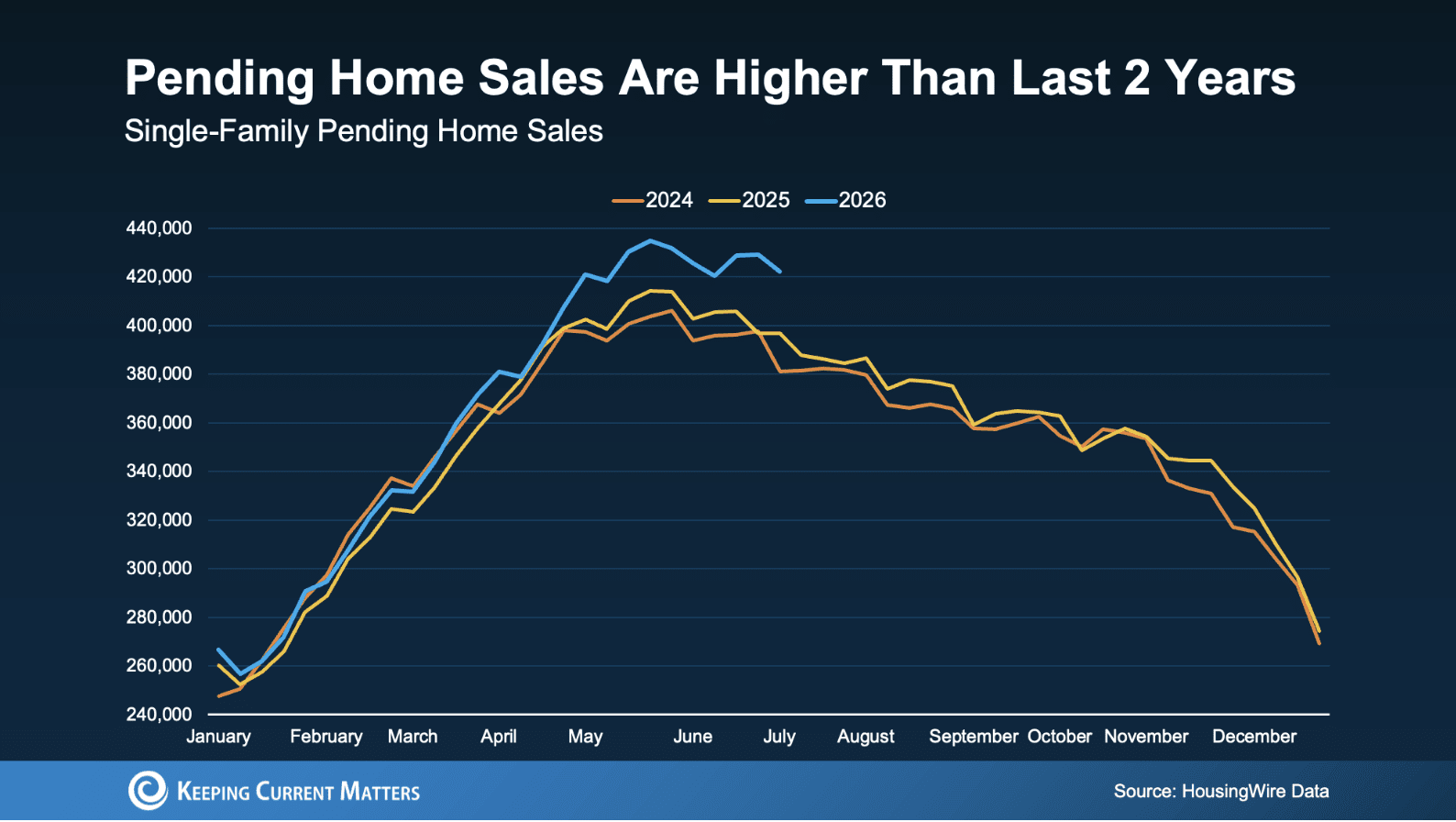

One of the best ways to measure buyer demand is by looking at pending home sales. Those are homes that have gone under contract but haven’t closed yet. Yes, nationally up to 16 % of homes under contract currently fall out of escrow (canceling their purchase agreements). According to market reports from Redfin, this equates to upwards of 40,000 canceled home-purchase agreements per month, hovering near record highs as roughly 1 in 7 transactions collapse prior to closing but pending sales at least give us a good idea of what the market is doing. An article on Keeping Matters Current called pending sales, "a real-time pulse check on the market and whether buyers are still buying." I think that is a great descriptor.
HousingWire Data shows more homes are going under contract than at the same time the past 2 years. While it may come as a surprise, the numbers speak for themselves. It doesn’t mean buyers are everywhere, but it does mean they’re still active right now. And even if this ebbs and flows a bit in the weeks ahead, right now we’re still ahead of where we’ve been lately. Look at this graphic. 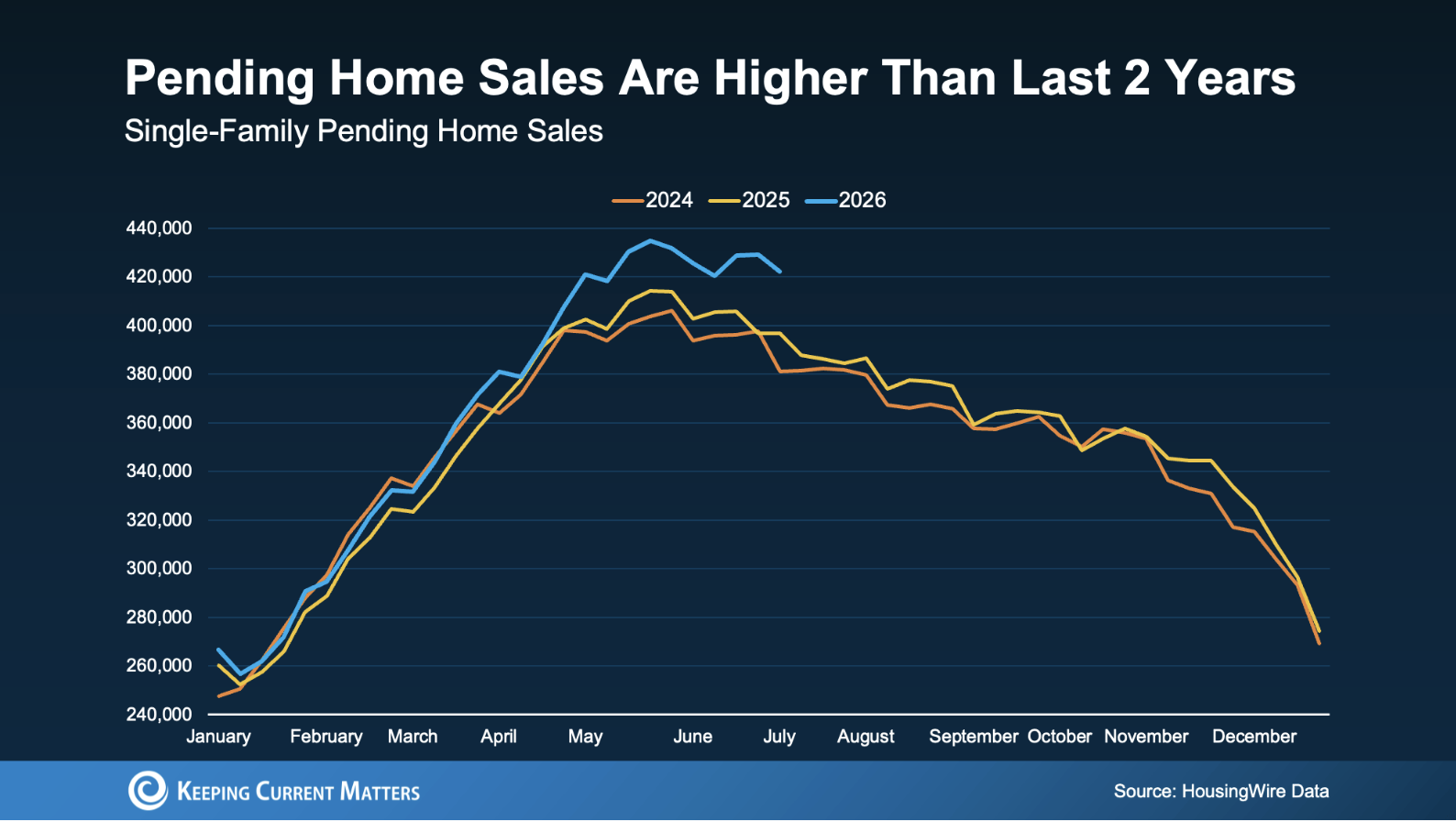
Many people are buying because they decided they can’t keep waiting. Whether it’s a growing family, a new job, retirement, or simply wanting a different home, life happens… even when mortgage rates stay higher than we’d like. As Lawrence Yun, Chief Economist at the National Association of Realtors (NAR), explains:
“A late spring buyer rush—even with mortgage rates not budging—is an indication of pent-up housing demand and consumers’ acceptance of above-6% mortgage rates as the new normal.”
So, if you’ve been worried no one’s buying, this data should give you some confidence. Today’s buyers aren’t just casually browsing open houses on a Sunday afternoon, they’ve spent months waiting for rates to improve and now they realize they can’t wait anymore.
That means they have a purpose and a timeline. And that’s exactly the kind of motivated buyer you want to work with. Call me if you are thinking about listing your house. The sooner the better as we look ahead to the fourth quarter of the year. You can see what the statistics tell us about that period.