
For the first time in three years, the Federal Reserve Board raised interest rates a quarter point last week in an effort to lower inflation. This brings the central bank’s benchmark lending rate to 3.75%-4%. The vote was unanimous and the majority of Federal Open Market Committee (FOMC) members voting have projected one more rate hike this year in their notes released after the meeting. The FOMC is the branch of the Federal Reserve that makes key decisions about U.S. monetary policy and interest rates so what they project matters.
While there is no direct effect on long-term mortgage loans, there are rate changes on adjustable-rate mortgages (ARMs) and home equity line of credit loans (HELOCs).
Long-term mortgages are more closely tied to the 10-year Treasury yield. Rising inflation, global tension, and ballooning government debt have caused a sell-off in the bond market in recent weeks. This triggered a rise in bond yields, and in turn, mortgage rates crept up.
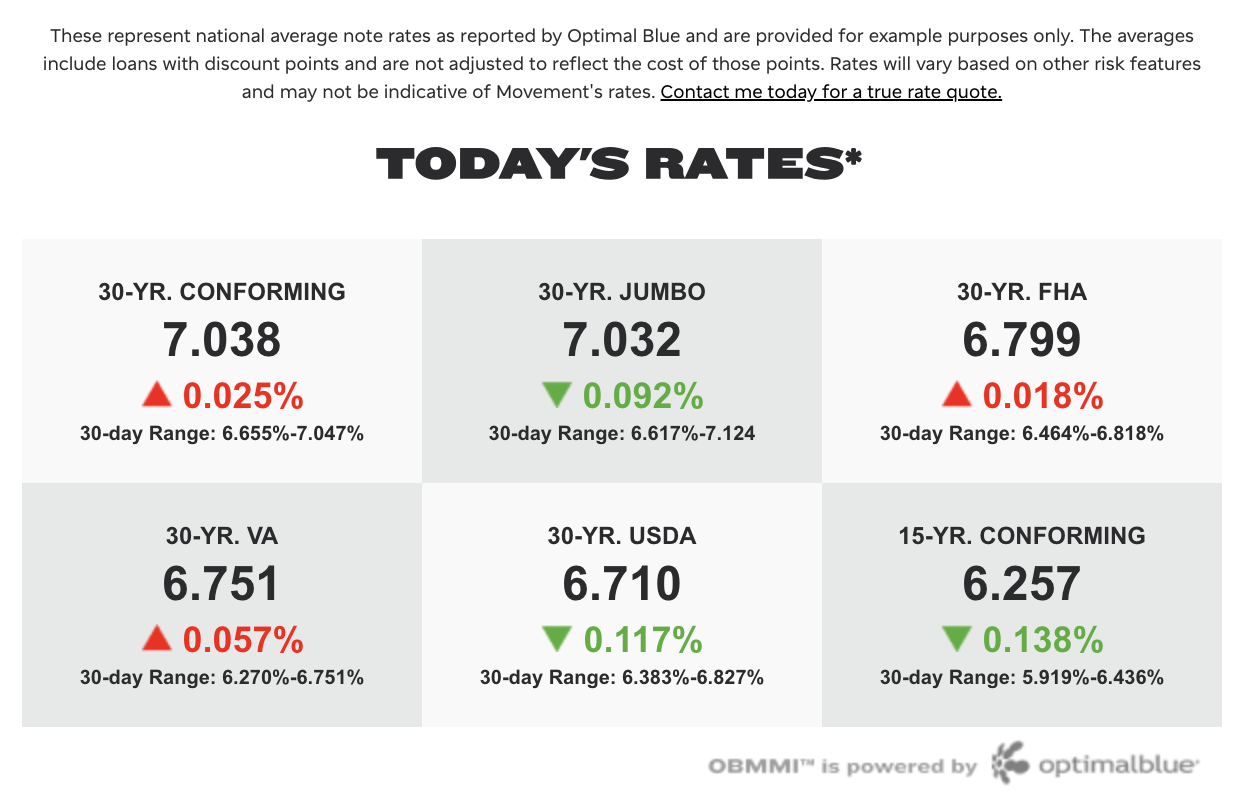
Following the Federal Reserve’s meeting, bond yields rose to 5%, causing long-term mortgage rates to rise again. Freddie Mac reported the national average on 30-year fixed-rate mortgages at 6.95% as of September 17th. This is up from one year ago, when the 30-year FRM averaged 6.26%.
While the US Treasury announced an aggressive buyback plan through November 4, we have yet to see concrete positive results in terms of lower mortgage interest rates. Below are rates sent to me today by Amanda Silber at Movement Mortgage.